
Lawn Grading & Levelling Services
Before a lawn, garden, or patio can hold up over time, the ground underneath it has to be right. We handle the grading and excavation that comes before those projects, so everything we build on top of it stays level, drains properly, and lasts.
Why Grading and Excavation Come First
A yard that looks fine on the surface can still be working against you underneath. If water pools after a normal rain, if the lawn feels spongy when you walk on it, or if you notice bare patches where grass never quite fills in, the ground is usually telling you it’s not shedding water the way it should. Left alone, that kind of standing water finds the path of least resistance, and that’s often toward your foundation rather than away from it.
Uneven ground causes problems beyond drainage too. Soil that isn’t graded consistently erodes unevenly, washing topsoil into low spots and leaving high spots thin and rocky. If you’re planning to install a patio, a retaining wall, or a new lawn on top of that unevenness, you’re building on a surface that’s already unstable. We grade and excavate first so whatever comes next has a solid, properly sloped base to sit on.
EXPLORE THE POSSIBILITIES
AND GET IN TOUCH WITH US
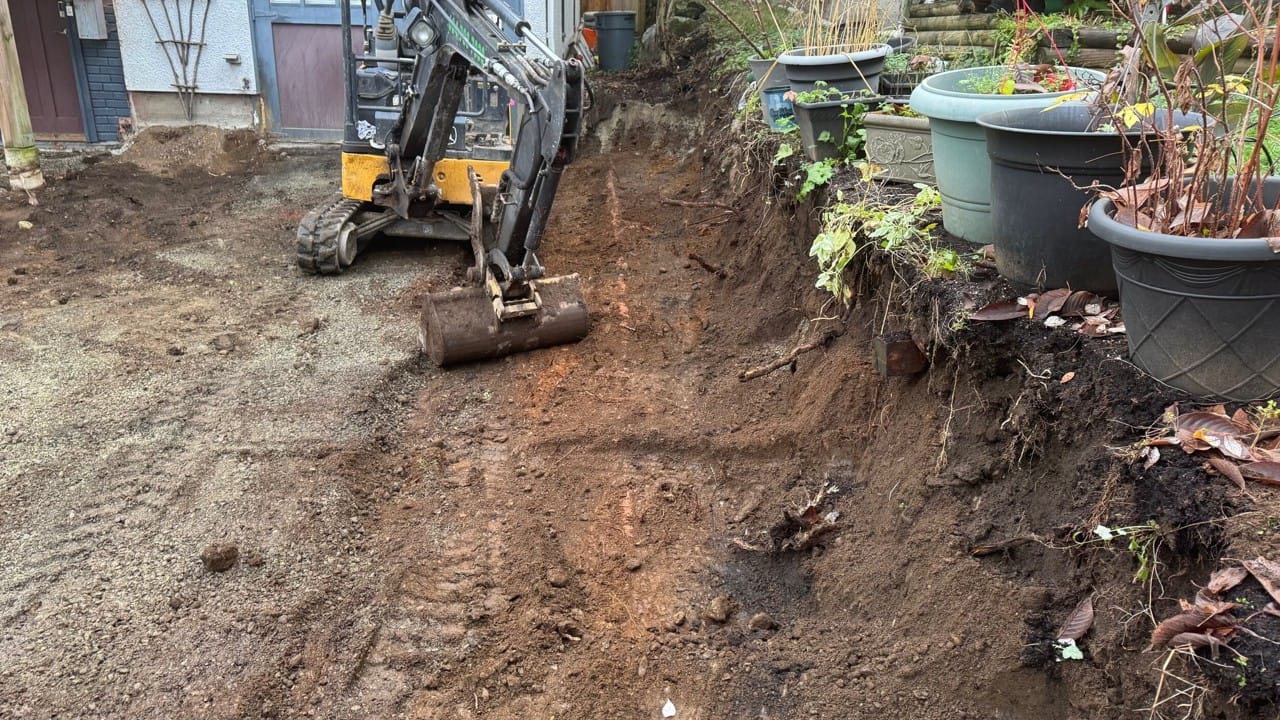
Our Excavation and Levelling Process
We start every job with a site assessment. We walk the property, check how the existing grade moves water, and identify the high points, low points, and any spots where drainage is already failing. From there we plan the grade the yard actually needs rather than a generic slope, because the right target depends on your soil, your lot size, and what you’re building on top of it.
Once we know the plan, we bring in the right equipment for the scope of the job, from compact excavators for tight residential lots to larger equipment for bigger sites, and remove or redistribute soil to establish the new grade. We compact as we go rather than only at the end, since soil that isn’t compacted properly will settle unevenly later and undo the work. Where drainage is part of the scope, we install it as we grade, so the finished surface and the drainage underneath it are working together.
Before any digging starts, we get utility locates done. That’s not a step we skip to save time. Hitting a gas or utility line is a real risk on any excavation job, and locates protect your property and everyone working on it. We also protect the parts of your property that aren’t part of the job, using tarps, timber mats, plywood, or locking composite planks to keep equipment traffic from tearing up lawns, driveways, or walkways that don’t need to be touched.
When Do You Need Excavation Before Landscaping?
Excavation and grading aren’t something every yard, but a few situations reliably call for it:
- Water pools in the same spots after rain, or your lawn stays soggy days after everyone else’s has dried out
- The yard has visible high spots, low spots, or a slope that clearly pushes water toward the house instead of away from it
- You’re planning a new lawn, garden bed, or sod installation and want it to establish evenly instead of settling into an already uneven grade
- You’re adding a patio, retaining wall, or other hardscape feature, all of which need a level, compacted base to hold up over time
- A previous grading job was done without proper compaction and is now settling or eroding unevenly
If more than one of these sounds like your yard, it’s worth having us come take a look before you commit to the next phase of the project.

Frequently Asked Questions
How do I know if my yard needs grading instead of just drainage work?
If water is pooling in specific low spots, drainage fixes alone can help, but if the whole yard slopes the wrong way or settles unevenly, grading addresses the cause instead of just moving water around.
Can you grade around an existing lawn or garden, or does everything need to be removed first?
It depends on the extent of the regrading. Minor corrections can sometimes work around existing plantings, but a full regrade usually means starting with a clean, level base and reinstalling the lawn or beds afterward.
Do I need a permit for excavation on a residential lot?
It depends on the depth of the work and whether it’s near a property line, sidewalk, or municipal infrastructure. We’ll flag it during the site assessment if your project needs anything filed with the municipality.
How long does excavation and grading take before a new patio or retaining wall can go in?
It depends on lot size, soil conditions, and access, which is why we scope every job individually rather than giving a general timeline upfront.
Will grading fix a yard that already floods regularly?
In most cases, yes. Re-grading the slope so water moves away from the house and toward proper drainage is usually the most effective long-term fix, rather than repeatedly clearing standing water after the fact.
Do you handle the utility locates, or do I need to arrange that myself?
We arrange utility locates as part of every excavation job before any digging starts. It’s a standard part of our process, not an extra step you need to coordinate.
Is grading necessary if I’m only installing new sod, not a patio or wall?
Yes. Sod that goes down on an uneven or poorly draining base will show the same problems the old lawn had within a season or two, so grading first protects the investment in the new lawn.