
Cedar Fencing Installation for Lower Mainland Homes
We build fences for privacy, security, and curb appeal across the Lower Mainland, in cedar, composite, vinyl, and aluminum. Every fence we put in the ground is built to handle our wet coastal winters and still look good doing it.
Fence Materials We Install
The right material depends on the look you want, how much upkeep you are happy to take on, and what the fence needs to do for your yard:
- Cedar, a natural wood with a warm, classic look that you can stain, seal, or let weather to a soft silver-grey
- Composite, made from wood fibres blended with recycled plastics, which gives you a wood-style look without the staining or sealing
- Vinyl, a smooth, solid-colour fence that resists rot and never needs painting
- Aluminum, a lightweight metal fence that resists rust and keeps the view open, which suits front yards and garden boundaries
If you are not sure which material fits your property, we will talk through the options with you when we walk the property line. Cedar is our most requested choice, so we cover it in more detail below.
Why Homeowners Choose Cedar
Cedar has stayed the top choice for Lower Mainland fencing for a reason. It carries natural oils that resist rot, insects, and decay without a chemical treatment, which matters here more than almost anywhere else in the country given how many months of rain our fences sit through every year. It is also lighter to work with than most alternatives, holds a stain or finish evenly, and ages into a soft silver-grey if you decide to leave it bare. We install cedar fencing on residential properties looking for privacy from neighbours, security around a yard, or simply a fence that looks like it belongs on the property rather than bolted onto it.
EXPLORE THE POSSIBILITIES
AND GET IN TOUCH WITH US
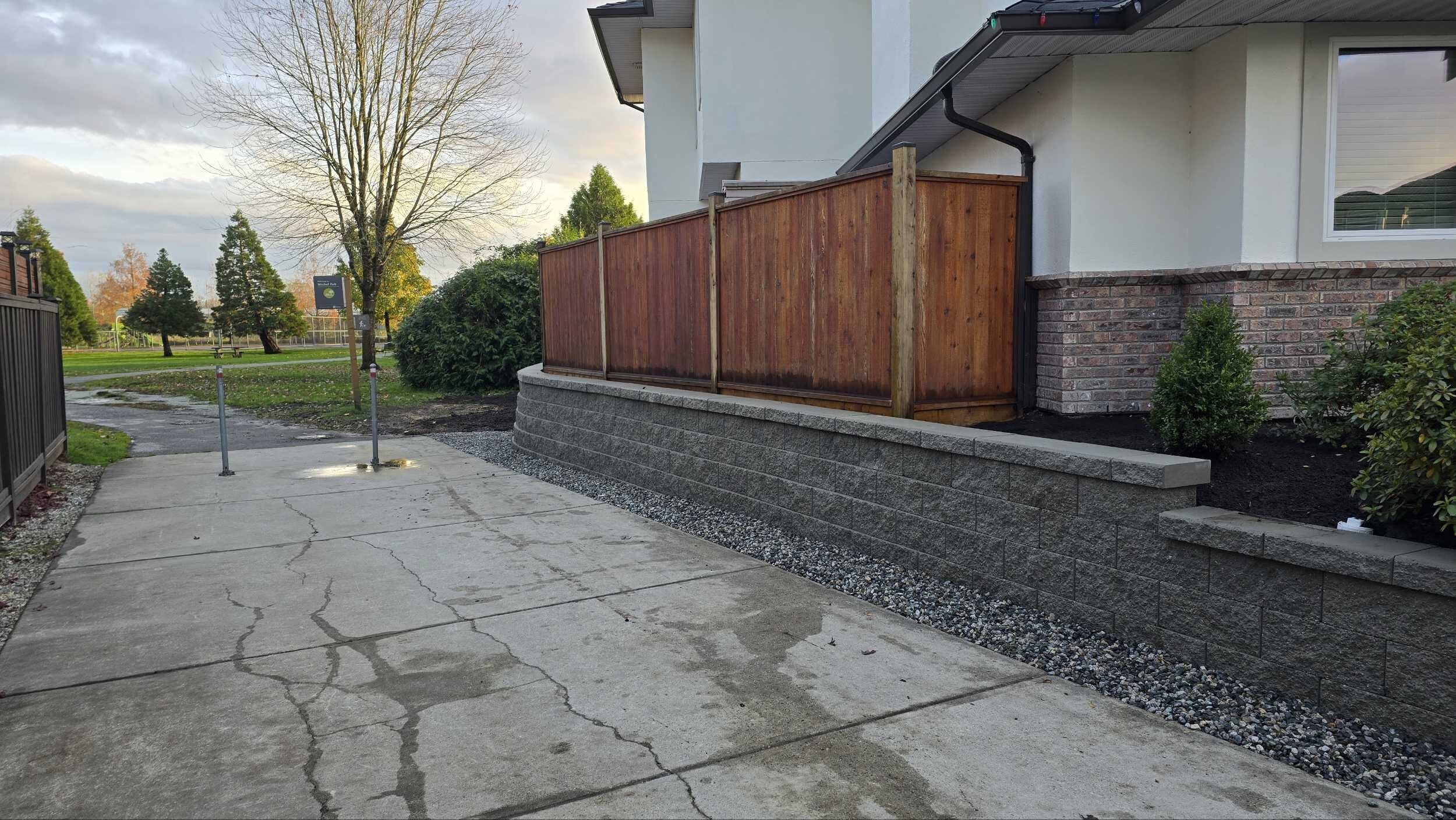
Fence Styles We Build
Every property calls for a different approach, so we design each fence around how you actually use your yard:
- Privacy fences: tight board-on-board or solid panel construction with no sightlines, built for backyards that back onto a road, a park, or another home
- Picket fences: shorter, spaced-slat fencing for front yards, gardens, and anywhere you want a boundary without blocking the view
- Horizontal board fences: a cleaner, more modern look built from wide cedar boards run side to side instead of stacked vertically
- Semi-privacy fences: alternating boards on each side of the rail, which lets air and light through while still screening most of the view
We can also add a lattice top to any of these styles if you want extra height or a decorative finish without losing the open feel below it.
Cedar Grades and What They Mean for Your Fence
Not all cedar boards are graded the same way, and the grade you pick changes both the look and the price of your fence. Select Knotty cedar is the grade we use most often: tight, attractive knots that give the fence character without the cost of clear cedar, which comes from the centre of the tree and carries almost no knots at all. Lower grades still hold up structurally but show more visible imperfections. We walk you through the grade options during your quote so you know exactly what you are paying for and what it will look like once it is standing.


DESIGN
We walk the property line with you, talk through height, style, and gate placement, and confirm what your local bylaw allows before anything is priced.

BUILD
We set posts below frost depth, frame the fence square and level, and install the boards you chose to spec.

ENJOY
We clean up the site fully and walk you through basic care before we consider the job finished.
What Fence Installation Costs
Your final price depends on the height of the fence, the style you choose, the material and grade, and how much site prep the property needs before we can start setting posts. A straightforward, standard-grade privacy fence sits toward the lower end of the range, while taller fences, premium grades, or properties needing extra excavation and levelling cost more. We give every project a fixed-price quote before work starts, so you know the number going in rather than finding out at the end.

Maintaining Your Fence in Our Climate
Cedar handles the Lower Mainland’s rain and freeze-thaw winters better than most fencing materials, but it still needs some attention to get the full 20 to 30 years out of it. A coat of stain or sealant every two to three years protects the wood from moisture and UV exposure and keeps the colour from fading to grey if that is not the look you want. Keeping soil and mulch from piling up against the bottom boards and checking posts at ground level once a year go a long way toward avoiding early rot.
Composite, vinyl, and aluminum fences need far less attention than wood. An occasional wash to clear dirt and pollen is usually all they ask for.
Frequently Asked Questions
How much does a cedar fence cost in the Lower Mainland?
Most cedar fences we install run between $30 and $90 per linear foot, with the final number set by height, style, cedar grade, and site conditions. We give you a fixed-price quote up front so there is no guessing.
How long does a cedar fence actually last?
Expect 20 to 30 years from a properly built cedar fence, and closer to the higher end of that range if you stain or seal it every couple of years rather than leaving it bare.
Do I need a permit to install a fence on my property?
It depends on the height and location of the fence and the municipality you are in. We check the local bylaw for your address during the design stage so your fence is built within the rules from the start.
Should I stain my cedar fence or leave it natural?
Either works. Left bare, cedar weathers to a silver-grey over time. Stained or sealed every two to three years, it holds its original colour and typically lasts longer.
Which fence material is right for my yard?
It comes down to the look you want and how much upkeep you are willing to take on. Cedar offers a natural wood finish, composite gives you a wood-style look without the staining, vinyl is a smooth, low-maintenance option, and aluminum keeps sightlines open. We talk through the options when we walk your property.
What is the difference between cedar grades?
Select Knotty cedar has tight, attractive knots and is the grade we install most often. Clear cedar has almost no knots and costs more. Both hold up structurally; the difference is mostly appearance and price.
Can you match an existing fence line or work around a slope?
Yes. We design around whatever is already on the property, including existing fence lines, retaining walls, slopes, and garden beds, rather than forcing a standard layout onto an irregular yard.
How do I get a quote for a fence?
Call or text us at 604-763-7038 and we will walk the property with you, talk through style and height, and give you a fixed price before any work begins.


